



Heat Seal & Peel Strength Testing of Flexible Packaging: F88, F2029 & the Seal Curve
Every pouch, sachet and bag lives or dies at its seal. Too cold a seal leaks; too hot a seal burns through and embrittles. Two instruments define seal quality: a laboratory Heat Sealer (per ASTM F 2029) that makes seals under precisely controlled temperature, pressure and dwell time — and a Peel Tester that measures their strength per ASTM F 88.
Together they generate the seal curve — the single most useful chart a flexible-packaging lab produces.
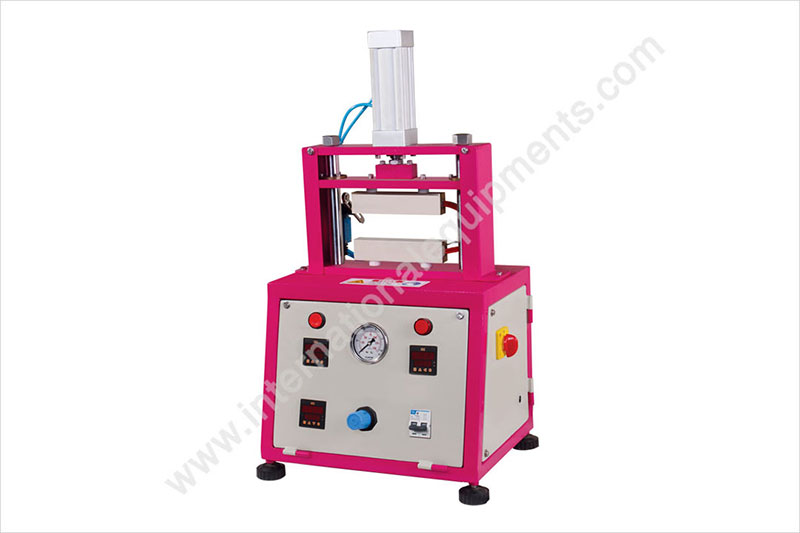
Making Seals: The Laboratory Heat Sealer
Production sealing jaws vary; a laboratory heat sealer removes that variation. Jaw temperature is controlled to ±1 °C, pressure is set by regulator, and dwell time by timer — so a seal made today is identical to one made next month. By sealing specimens across a range of temperatures at fixed pressure and dwell, you map exactly where your film starts sealing and where it starts degrading.
Measuring Seals: ASTM F 88 Peel Testing
Sealed strips 15 or 25 mm wide are pulled apart in a tensile frame at constant speed, with the tail either supported, unsupported or held at 90° — the standard's three techniques, which give different numbers and must be reported. Results are recorded as peak and average seal strength in N/15 mm or N/25 mm, along with the failure mode: peel, delamination, break at seal, or material break.
- Seal initiation temperature — where measurable strength first appears.
- Plateau strength — the stable maximum across the operating window.
- Operating window width — wide windows forgive machine variation; narrow windows cause production leakers.
- Hot tack — strength while still warm, critical for vertical form-fill-seal lines dropping product onto fresh seals.
Why the Seal Curve Pays for Itself
A documented seal curve lets converters set production jaw temperatures scientifically, qualify alternative resins or recycled-content films in days, and defend against customer leak complaints with data. Pair these instruments with tensile and dart impact testing to complete the flexible-packaging bench — see our packaging industry testing equipment overview.
Frequently Asked Questions
What is the difference between seal strength and hot tack?
What seal strength should a food pouch achieve?
Why do F88 techniques (supported vs unsupported tail) give different results?
Can the same peel tester measure laminate bond strength?
Need help selecting the right testing equipment?
International Equipments has manufactured and exported testing machines to laboratories in 60+ countries since 1971. Share your application and standards — our engineers will recommend the right configuration.
Request a QuoteBrowse All Machines