



Izod vs Charpy Impact Testing of Plastics: Methods, Notching & Machine Selection
Impact resistance tells you whether a plastic part survives a drop, a knock or a cold-weather shock. Two pendulum methods dominate: Izod (ASTM D 256, ISO 180) and Charpy (ASTM D 6110, ISO 179). Both swing a calibrated hammer into a notched bar and measure absorbed energy — but the specimen mounting and reported units differ.
A combined Izod / Charpy Impact Tester performs both methods on one frame. This article compares them and explains why notch quality decides whether your data can be trusted.
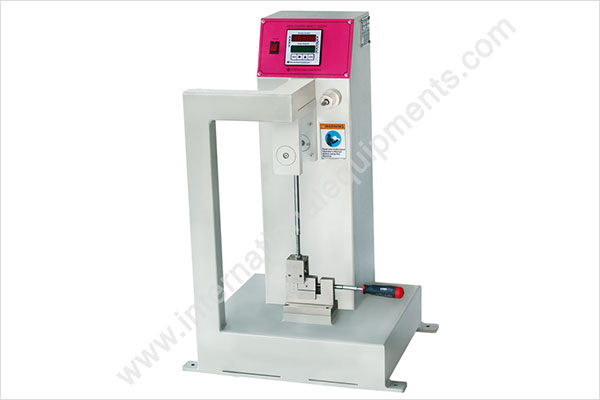
Izod vs Charpy: The Practical Difference
- Izod — specimen clamped vertically as a cantilever, notch facing the hammer; standard for North American datasheets, reported in J/m or ft·lb/in.
- Charpy — specimen supported horizontally at both ends, struck behind the notch; preferred in ISO/European specifications, reported in kJ/m².
- Same physics, different geometry — values from the two methods are not interchangeable and must never be compared directly.
Export manufacturers typically need both: an American buyer will ask for Izod per ASTM D 256, a European buyer for Charpy per ISO 179. A dual-configuration pendulum with interchangeable strikers and vices covers both without buying two machines.
Notching: Where Most Impact Data Goes Wrong
The 'V' notch concentrates stress so failure starts at a defined point. Its depth, angle (45°) and root radius (0.25 mm) are specified tightly — a blunt or torn notch can double the apparent impact strength. That is why standards effectively require machined notches from a Motorized Notch Cutter rather than hand-cut ones.
Verify every batch of notches with a Micro-meter Jig for depth measurement, and prepare clean specimen blanks with a Contour Cutter or hydraulic sample press. For unnotched-specimen work such as pipe fittings, see our falling weight Impact Tester.
Selecting an Impact Tester
Choose pendulum energies that bracket your materials — brittle filled grades need small hammers for resolution, tough copolymers need larger ones so the pendulum retains enough residual energy. Look for hardened knife edges, friction-compensated bearings, digital angle encoders and a rigid base; per the standards, the machine must lose almost no energy to vibration.
Frequently Asked Questions
Can Izod values be converted to Charpy values?
Why do standards require a motorized notch cutter?
What does 'NB' (non-break) mean in impact results?
Which impact test applies to pipes and fittings?
Need help selecting the right testing equipment?
International Equipments has manufactured and exported testing machines to laboratories in 60+ countries since 1971. Share your application and standards — our engineers will recommend the right configuration.
Request a QuoteBrowse All Machines